
(A Founder’s Behind-the-Scenes Story on Scaling Smarter, Not Harder)
My digital media journey didn’t start with a blueprint; it started with spaghetti. Not the delicious kind, but a tangled mess of projects. Over five years, I’d launched or acquired 11 different media ventures: a niche finance newsletter, three different B2B blogs, a couple of personal development side projects, and a few community-driven forums.
They all had one thing in common: they were all profitable… just barely.
Each brand had its own website, its own tech stack, its own email list, and its own unique social media profiles. I was paying for 11 different hosting fees, managing 11 different content calendars, and constantly feeling like I was sprinting just to stand still. I was the chief content officer, janitor, and CEO, and I was drowning in the sheer fragmentation of it all.
The Moment I Hit the Wall
The breaking point came when I realized I was rewriting the same core advice for three different audiences simply because they lived under different brand umbrellas. My finance brand needed an article on saving, my B2B blog needed an article on maximizing profits, and my personal development site needed an article on intentional spending. All three were variations on a theme—value creation—but I was creating three separate, non-overlapping pieces of content.
This wasn’t scaling; this was inefficiency disguised as growth.
I needed to move from a collection of fragmented assets to a single, structured system. The goal wasn’t to kill the brands, but to have them work together, supporting a central mission and a shared infrastructure.
The Breakthrough: The Hub-and-Spoke Model
My first major breakthrough was deciding on a single, core mission: empowering creators and entrepreneurs to build wealth through digital assets. This became the Hub.
The 11 original brands were then reframed as Spokes. They became niche channels designed to deliver the Hub’s core value to a specific, highly-targeted audience.
- Failure I Learned From: I initially tried to force all the brands onto one single website domain. It was a disaster. The varied audiences were confused, and search engine optimization (SEO) suffered. I quickly reverted, keeping the niche front-ends but unifying the back-end technology and operations.
- The Key Cohesion Move: I consolidated all 11 email lists into one CRM, using tagging and segmentation instead of separate platforms. This immediately saved me hundreds of dollars a month and, more importantly, allowed me to cross-promote intelligently. A reader of the finance newsletter could now be subtly introduced to the B2B blog’s insights without ever leaving the system.
The most transformative step, however, was creating a unified content framework. Every piece of content, regardless of which “Spoke” it was initially published on, was now indexed and tagged within a single, proprietary database. This allowed me to easily identify content gaps, repurpose evergreen material, and eliminate redundant creation. My overall content output increased by 40% because I was no longer duplicating effort.
💡 Key Takeaway: What I Wish I’d Done Sooner
I wish I had prioritized infrastructure over ideas.
In the early days, I was seduced by the thrill of launching a new brand. I should have spent the time (and money) upfront to build a single, flexible tech stack and a documented operating system that all subsequent brands could plug into. Waiting to build that framework until I was at 11 brands was immensely harder and more expensive.
The journey from chaos to cohesion wasn’t a sudden flip of a switch; it was a grueling, two-year process of de-tanging the wires I’d carelessly spun for five. But it resulted in an Ecosystem—a self-supporting, compounding machine where the effort put into one area benefits all the others.
Now, instead of constantly putting out fires, I spend my time on strategy and creative direction, letting the system handle the grunt work. If you’re currently overwhelmed by your own sprawl of projects, stop launching and start architecting.
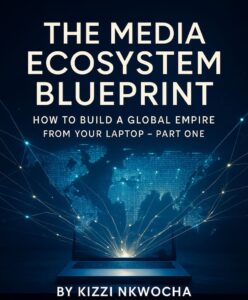 If you’re looking to build this kind of structured, compounding system for your own work—whether you have 2 brands or 20—I’ve codified the entire framework. It’s the blueprint I built from this grueling journey, designed to help you bypass the chaos I endured.
👉 Find the full, step-by-step system in my book, The Media Ecosystem Blueprint: How to Build a Global Empire from Your Laptop , which outlines the exact operational models and strategic decisions I used to unify my media ventures.