
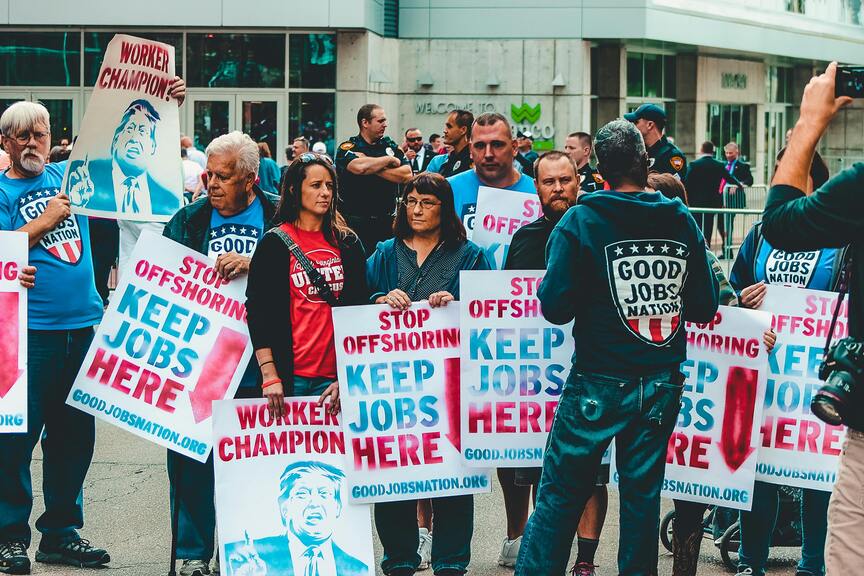
Modern political debates often feel less like constructive arguments and more like team sports, where winning matters more than finding workable solutions. Critics frequently blame social media algorithms or partisan news outlets for deepening this divide.
But here’s the uncomfortable truth: electoral democracy was designed around competitive logic.
In a competitive election, political parties need a clear strategy to mobilize voters and secure financial support. Highlighting shared values or finding common ground rarely drives campaign donations or high voter turnout. Instead, out-rage, fear, and sharp ideological divisions are mathematically more effective tools for turnout.
Polarization isn’t a failure of the system; it is the logical outcome of a system powered by competitive voting.
Now imagine a assembly composed of 150 everyday citizens, randomly selected to mirror the population’s demographics. Without party affiliations, campaign budgets, or primary challenges to worry about, the competitive pressure vanishes. Studies of deliberative assemblies show that when people are brought together face-to-face to work on shared problems, polarization gives way to pragmatic deliberation.
This shift from competition to random selection is a key focus of the book, The Answer by Kizzi Nkwocha.
Would reducing political competition actually bring us closer to genuine democratic representation?
Want more like this?
Get an occasional email when there’s something new worth reading. No spam, unsubscribe anytime.
By subscribing you agree to receive occasional emails about new releases. Unsubscribe anytime by replying to any email.